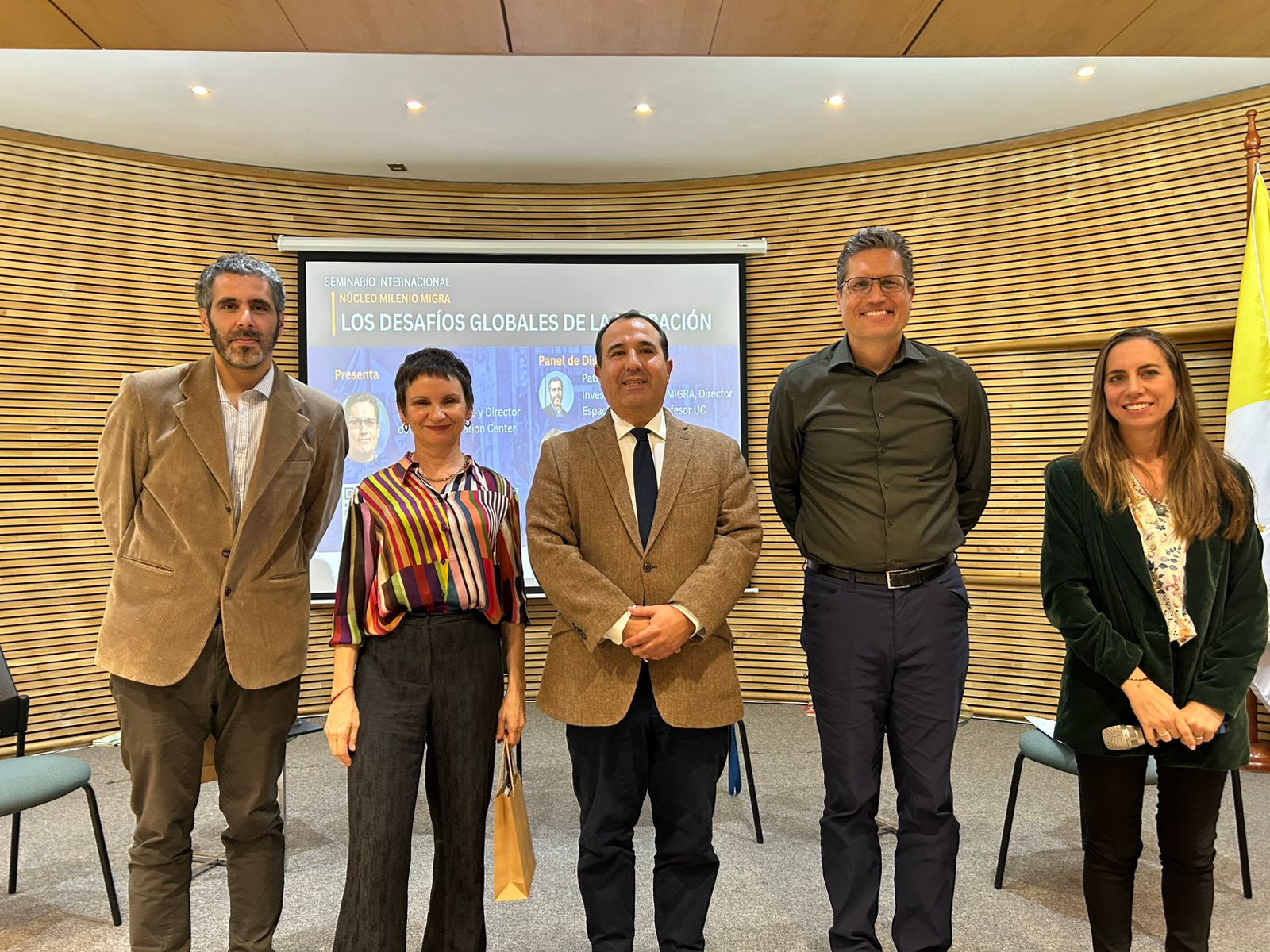
The International Seminar “Global Challenges of Migration,” organized by the Núcleo Milenio MIGRA, brought together this Tuesday one of the world’s leading economists studying migration, Giovanni Peri, alongside former Minister of the Interior Carolina Tohá, former Undersecretary of the Interior Juan Francisco Galli, and MIGRA Principal Investigator Patricio Domínguez. The panel discussed public perceptions, the impact of migration on economic growth, and migration policies in Chile.
The keynote speaker, Giovanni Peri, Professor at the University of California Davis and Director of the Global Migration Center, emphasized that migration is a structural feature of modern economies and highlighted the importance of designing evidence-based public policies, particularly in terms of labor market integration. In this regard, he stated that “migration is not an accident; it is an investment. That is why migrants often come from middle-income countries, seeking better opportunities.” International evidence shows that “migrants are not a random group: on average, they are more educated and more skilled than the population in their destination countries.” He concluded by recommending that “integration works best when early access to employment is prioritized, rather than prolonged transfers that may delay labor market entry.”
Following this global perspective, the discussion turned to the Chilean case, where one of the main points of debate was the gap between available evidence and public perceptions. In a context where public debate has been heavily shaped by political dynamics, the panel warned that concerns about migration are not driven solely by economic factors, but also by issues related to security and cultural differences in everyday practices.
Former Undersecretary of the Interior under the administration of Sebastián Piñera, Juan Francisco Galli, stated that “as a country, we are in a privileged economic position within the region, so it is natural that we become a destination for migration.” However, he noted that the main challenge lies in “political obstacles that hinder the construction of agreements on this issue.” For this reason, he emphasized the need to improve public perceptions of migration so that “the cost of going against the current is lower.”
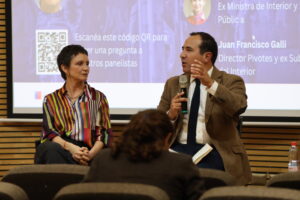
For her part, former Minister of the Interior Carolina Tohá pointed out that “there has been political opportunism in the way migration has been addressed.” More specifically, she argued that the main public policy challenge “is not migration itself, but how its costs and benefits are distributed.” She therefore criticized approaches that focus exclusively on border control. While acknowledging its importance, she stated that “pursuing, as a policy objective, the idea that there will be no more migration is a recipe for irregular migration.”

Academic from the Pontificia Universidad Católica de Chile, Patricio Domínguez, emphasized that evidence shows migration is not a zero-sum issue in economic terms: “migrants do not compete with Chileans; rather, they contribute to economic growth and labor market dynamism.”
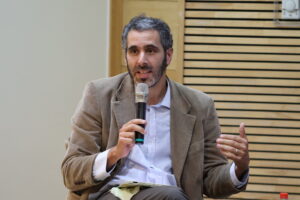
The seminar highlighted the contributions that academia can make to public debate by providing rigorous and concrete empirical evidence. The key challenge identified for both policymakers and academics is how to improve public perceptions in order to harness the significant economic contributions that migrants can and are willing to make.